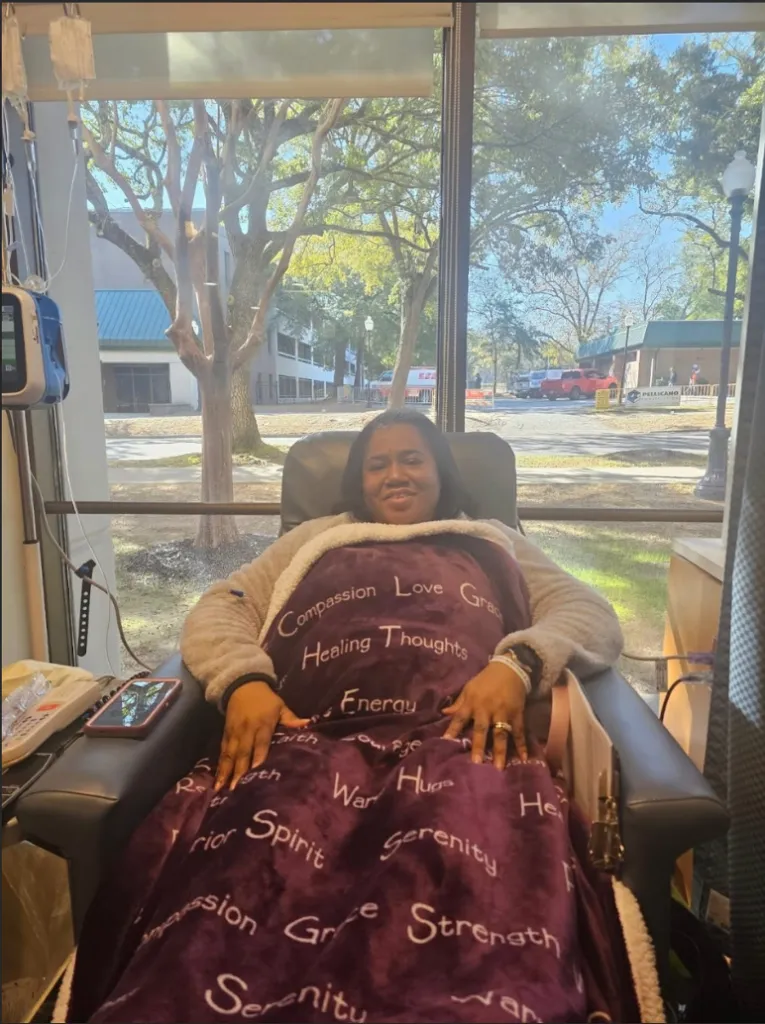
Fighting Breast Cancer in Rural Georgia: One Woman’s Story of Resilience, Family, and Healthcare Inequities

Kelly Washington was at work when a phone call changed everything: she had stage 2 breast cancer. “I was floored,” she recalled. “I basically had to lean against the counter. You never really expect to hear the word cancer about yourself.”

In the days that followed, life accelerated. Appointments, biopsies, and chemotherapy treatments filled her schedule, while fatigue forced her to slow down. Simple routines once taken for granted—late nights, long workdays, uninterrupted schedules—became distant memories.

Amid the fear, Washington found support. Her husband drove her to treatments, her eldest son helped care for her youngest child, and friends and family checked in constantly. “Everybody has rallied around me,” she said. “The love and support have been incredible.”

Washington’s experience highlights a broader reality in Albany, Georgia, where timely access to cancer care depends on insurance coverage, hospital capacity, and a limited healthcare infrastructure serving Southwest Georgia. Albany, a city of roughly 70,000, became an early COVID-19 hotspot in 2020, exposing long-standing weaknesses in the local healthcare system. Many residents face long waits for screenings, specialist referrals, and treatment—a problem intensified in rural communities across the country.

Washington’s cancer is triple-negative, an aggressive form that disproportionately affects Black women. According to the American Cancer Society, Black women are about 40% more likely to die from breast cancer than white women, even though incidence is slightly lower. In Albany, delayed screenings and limited access to specialists make early detection even more critical.

Despite the challenges, Washington’s timely diagnosis may have saved her life. Yet she remains acutely aware that many others do not get the same opportunity. She encourages women to pay attention to their bodies and seek care promptly.

“Some people don’t get that chance,” she said. “And by the time they finally see a doctor, the cancer has already progressed.”

Through treatment, Washington draws strength from her faith, family, and community. “This is a fight you take on for yourself,” she said. “But faith, family, and community make all the difference.”

Fighting Breast Cancer in Rural Georgia: One Woman’s Story of Resilience, Family, and Healthcare Inequities

Kelly Washington was at work when a phone call changed everything: she had stage 2 breast cancer. “I was floored,” she recalled. “I basically had to lean against the counter. You never really expect to hear the word cancer about yourself.”

In the days that followed, life accelerated. Appointments, biopsies, and chemotherapy treatments filled her schedule, while fatigue forced her to slow down. Simple routines once taken for granted—late nights, long workdays, uninterrupted schedules—became distant memories.

Amid the fear, Washington found support. Her husband drove her to treatments, her eldest son helped care for her youngest child, and friends and family checked in constantly. “Everybody has rallied around me,” she said. “The love and support have been incredible.”

Washington’s experience highlights a broader reality in Albany, Georgia, where timely access to cancer care depends on insurance coverage, hospital capacity, and a limited healthcare infrastructure serving Southwest Georgia. Albany, a city of roughly 70,000, became an early COVID-19 hotspot in 2020, exposing long-standing weaknesses in the local healthcare system. Many residents face long waits for screenings, specialist referrals, and treatment—a problem intensified in rural communities across the country.

Washington’s cancer is triple-negative, an aggressive form that disproportionately affects Black women. According to the American Cancer Society, Black women are about 40% more likely to die from breast cancer than white women, even though incidence is slightly lower. In Albany, delayed screenings and limited access to specialists make early detection even more critical.

Despite the challenges, Washington’s timely diagnosis may have saved her life. Yet she remains acutely aware that many others do not get the same opportunity. She encourages women to pay attention to their bodies and seek care promptly.

“Some people don’t get that chance,” she said. “And by the time they finally see a doctor, the cancer has already progressed.”

Through treatment, Washington draws strength from her faith, family, and community. “This is a fight you take on for yourself,” she said. “But faith, family, and community make all the difference.”

Leave a Comment

SIGN UP FOR
OUR NEWSLETTER

By subscribing, you agree to the Privacy Policy and Terms of Use.

MORE FOR YOU

Login

Don't have an account?