
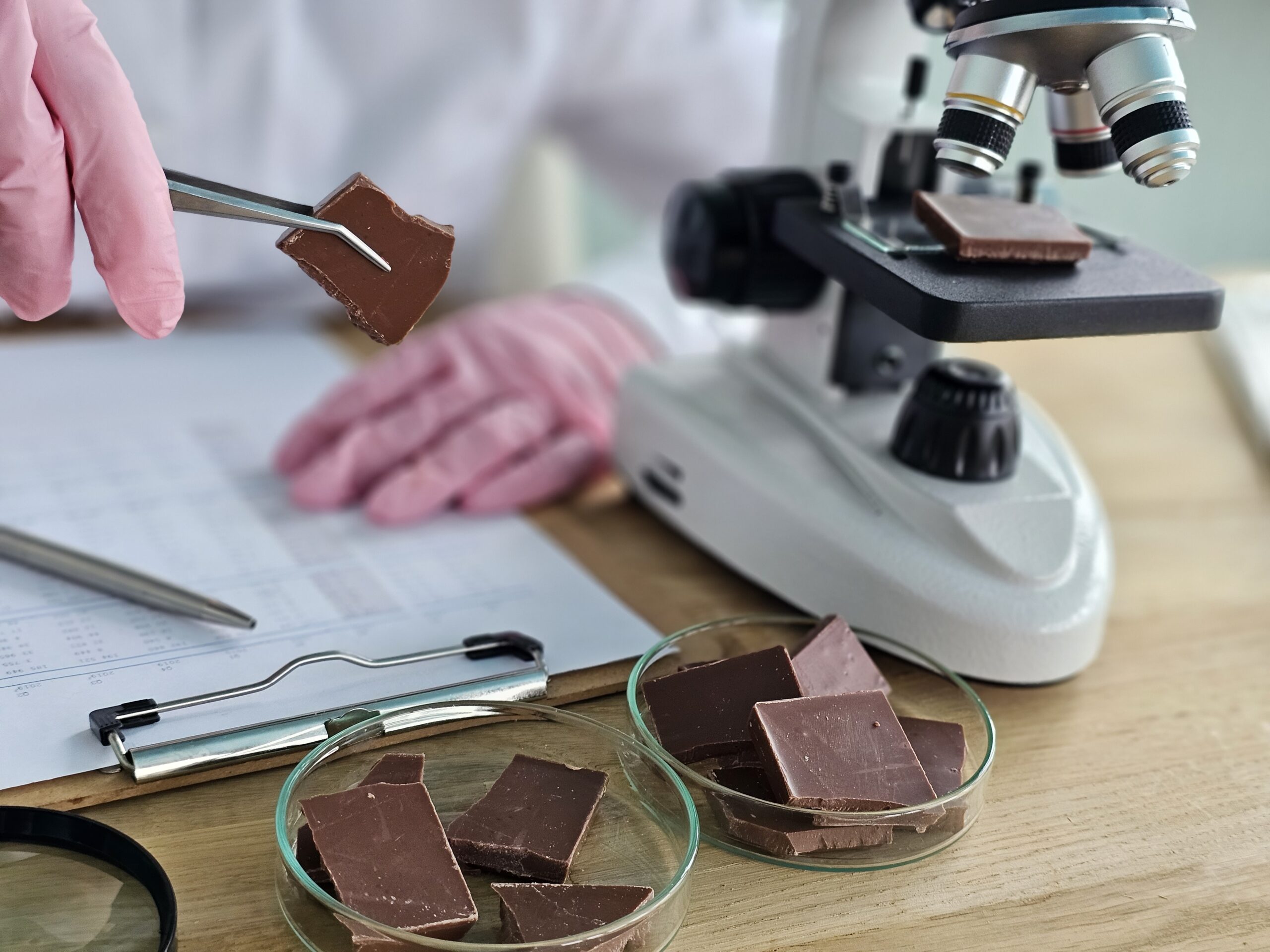
The global chocolate industry may be on the verge of a major shift as lab-grown chocolate is expected to reach commercial shelves by 2027, according to multiple food technology reports and industry developments.
Companies including biotech startup California Cultured and ingredient manufacturer Puratos are leading efforts to develop chocolate made from cultured cocoa cells grown in controlled laboratory environments instead of traditional cacao farming.
How Lab-Grown Chocolate Works
Unlike conventional chocolate, which is produced from cacao beans grown on trees in tropical regions, lab-grown chocolate begins with cocoa plant cells.
These cells are cultivated in bioreactors under controlled conditions, where they multiply and are later processed into cocoa ingredients such as cocoa butter and cocoa solids.
Researchers say the goal is to create cocoa products that are chemically similar to traditional chocolate, while reducing dependence on farmland, climate conditions, and long agricultural cycles.
Early versions of these products could become available as soon as late 2026, with wider distribution expected by 2027 as production increases and regulatory steps are completed.
Why the Industry Is Exploring It
The push for lab-grown chocolate is being driven by several global challenges affecting cocoa production, including:
- Rising cocoa prices and supply shortages
- Climate change impacting major cacao-growing regions
- Crop diseases and unstable harvests
- Increasing demand for sustainable food alternatives
Industry analysts say food companies are not only innovating but also trying to secure more stable and predictable cocoa supply chains.
Potential Benefits
Supporters of lab-grown cocoa say the technology could reduce environmental pressure linked to traditional cocoa farming, including deforestation and land expansion.
It may also make chocolate production more consistent and less vulnerable to weather disruptions and regional instability.
Some companies have described the innovation as a complement to farming rather than a full replacement.
Concerns and Challenges
Despite progress, lab-grown chocolate still faces key challenges before becoming mainstream, such as:
- Regulatory approval across different markets
- High production costs at scale
- Consumer acceptance of lab-grown foods
- Concerns about effects on traditional cocoa farmers
Some consumers also question whether lab-grown chocolate will match the taste and quality of conventional chocolate.
A Food Industry in Transition
Experts say the chocolate industry is entering a new era of rapid innovation, with companies exploring alternatives to traditional cocoa production.
If successful, lab-grown chocolate could reshape global supply chains, pricing, and production methods.
However, its long-term success will depend on regulation, cost efficiency, and consumer acceptance as the 2027 target approaches.
