
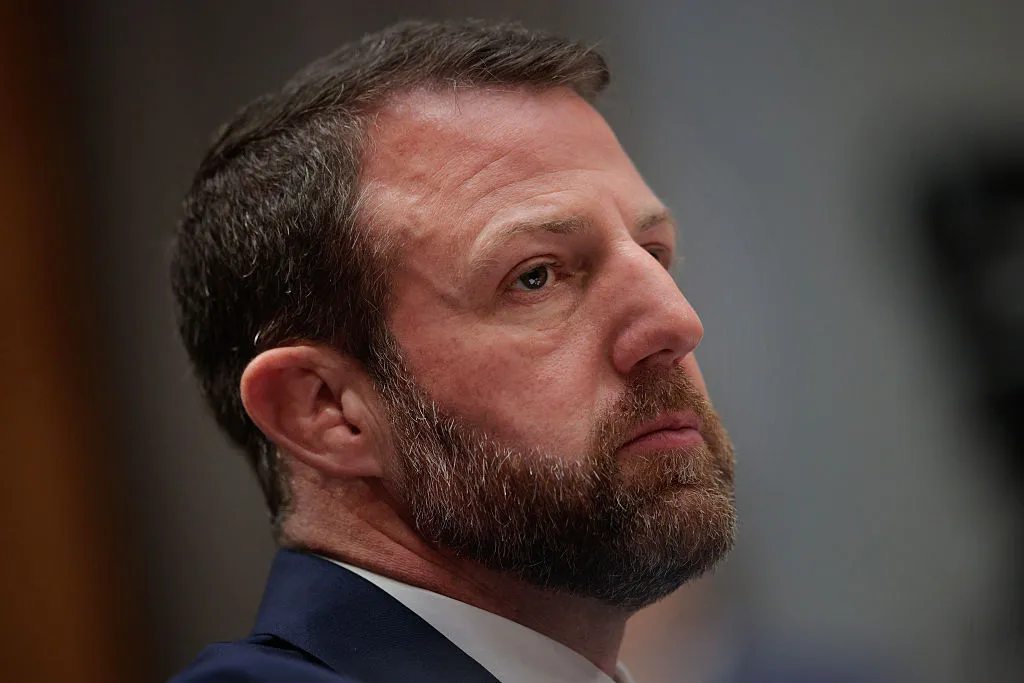
If there’s one thing many Americans hoped for at some point, it was that Donald Trump would eventually nominate someone to a major government position who appears qualified, thoughtful, and firmly grounded in reality.
Unfortunately, that expectation once again seems far out of reach.
Sen. Markwayne Mullin (R-Oklahoma), whom Trump has selected to replace Homeland Security Secretary Kristi Noem, is already drawing intense criticism after making a claim that left even fellow Republicans stunned. During a Senate confirmation hearing this week, Mullin suggested that dueling between two consenting adults is still technically legal in the United States.
Yes — dueling.
The moment came during a tense exchange with Sen. Rand Paul (R-Kentucky), who questioned Mullin about a controversial 2023 incident in which Mullin nearly got into a physical fight on the Senate floor with Teamsters President Sean O’Brien. The confrontation quickly went viral at the time and raised serious questions about Mullin’s temperament.
Paul brought the incident back up during the hearing, pointing out that Mullin had previously defended his behavior by referencing historical examples of violence in politics, including dueling and the infamous 1856 caning of Senator Charles Sumner.
When asked whether he still believed those examples justified violent confrontations today, Mullin replied that he was simply referring to “rules that still apply” to the Senate. He then added that dueling between two consenting adults “is still there.”
Paul immediately pushed back, stating clearly that dueling has been illegal in the United States for more than a century and that suggesting otherwise is both historically inaccurate and deeply concerning. He also reminded Mullin of the brutality of the Sumner attack, emphasizing that it was not a harmless political disagreement but a violent assault that nearly killed a sitting U.S. senator.
The exchange quickly became one of the most talked-about moments of the hearing, with critics questioning whether someone who appears confused about basic legal realities should be entrusted with leading the Department of Homeland Security.
Despite the backlash, Mullin doubled down, saying that while others are entitled to their opinion, he would remain focused on bringing “peace of mind and security” to the country if confirmed.
For many observers, however, the bigger issue is not politics but judgment. The idea that a nominee for one of the nation’s most critical security positions would treat something as extreme as dueling as a matter of opinion has raised serious doubts about his suitability for the role.
As the confirmation process continues, the controversy surrounding Mullin is unlikely to fade anytime soon — and it may end up being one of the defining moments of his nomination.
